



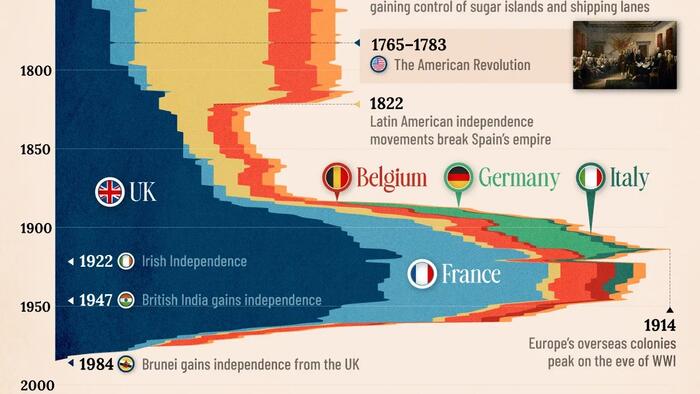
TLDR: European colonization from the late 15th century significantly shaped global history, driven by economic, religious, and cultural motives. It led to profound impacts, including displacement of indigenous populations, resource exploitation, and the rise of nationalist movements, culminating in decolonization in the mid-20th century. Its legacy continues to influence contemporary global inequalities.
European colonization has left an indelible mark on global history, shaping nations, cultures, and economies across continents. The process, which began in the late 15th century, saw various European powers expand their territories by establishing colonies in Africa, Asia, the Americas, and Oceania. The motivations behind this expansion were diverse, ranging from the pursuit of economic gain and resource extraction to the spread of religion and cultural influence.
Initially, the Age of Discovery, marked by figures like Christopher Columbus and Vasco da Gama, opened new trade routes and led to the establishment of overseas empires. The Spanish and Portuguese were among the first to colonize vast areas, claiming territories in the Americas and parts of Asia. However, the competition soon escalated, with England, France, the Netherlands, and later Germany and Italy, joining the race for colonies.
The impact of colonization was profound. Indigenous populations often faced displacement, violence, and diseases brought by colonizers, leading to significant demographic shifts. The introduction of European governance systems disrupted traditional structures, while the extraction of resources fueled the industrial revolutions back home. Additionally, the transatlantic slave trade emerged as a horrific consequence of colonization, creating enduring social and economic ramifications.
By the 19th century, the scramble for Africa exemplified the peak of colonial ambition, as European nations partitioned the continent with little regard for existing ethnic and cultural boundaries. This period also saw the rise of nationalist movements within colonized regions, as local populations began to resist foreign domination. The decolonization movement in the mid-20th century marked a significant turning point, leading to the independence of many nations and the gradual dismantling of colonial empires.
Today, the legacy of European colonization is still evident in various forms, from the political landscapes of former colonies to ongoing discussions about reparations and cultural restitution. Understanding this complex history is vital for addressing contemporary global inequalities and fostering a more equitable future. As we reflect on the past, it is crucial to recognize the resilience of colonized peoples and the continuing impact of colonial legacies on our world.
Please consider supporting this site, it would mean a lot to us!
