



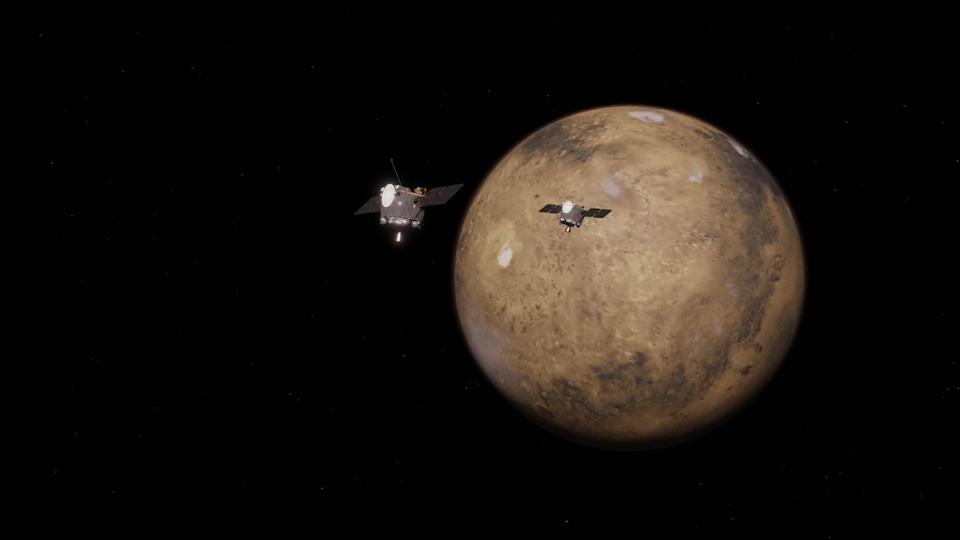
TLDR: NASA's study on orbital loitering reveals its potential for extended space observation, enhancing data collection on celestial bodies. This method allows for significant discoveries and understanding of cosmic phenomena, paving the way for future interplanetary missions and the possibility of resource utilization as humanity aims for multi-planetary existence.
NASA's recent study has unveiled fascinating insights into the behavior of celestial bodies, specifically focusing on the concept of orbital loitering. This term refers to the phenomenon where a spacecraft remains in a designated orbit for an extended period, allowing scientists to gather extensive data about its surroundings. With advancements in technology, this method is becoming increasingly viable for space exploration.
The study highlights the importance of long duration missions, emphasizing that extended observation can lead to significant discoveries. By maintaining a steady position in orbit, spacecraft can monitor changes in celestial environments, including the dynamics of asteroids, planets, and even distant stars. This persistent surveillance is crucial for understanding cosmic phenomena and could pave the way for future interplanetary missions.
One of the key benefits of orbital loitering is its ability to enhance data collection. Instead of making brief flybys, spacecraft can conduct in-depth analyses over time. For instance, the study suggests that by loitering in orbit, scientists can track seasonal changes on celestial bodies, gathering vital information that short-term missions might miss.
Moreover, the research underscores the role of space exploration in expanding our knowledge of the universe. As we continue to develop new technologies and refine our methods, the potential for discovering new worlds and understanding their characteristics increases. The implications of these findings stretch far beyond scientific curiosity; they hold the promise of future colonization and resource utilization as humanity looks toward becoming a multi-planetary species.
In conclusion, NASA’s exploration of orbital loitering presents a groundbreaking approach to space research. By capitalizing on the advantages of prolonged observation, scientists can enhance their understanding of the universe. As this field evolves, it opens doors to innovative possibilities in astrophysics and beyond, ultimately changing how we view our place in the cosmos.
Please consider supporting this site, it would mean a lot to us!
